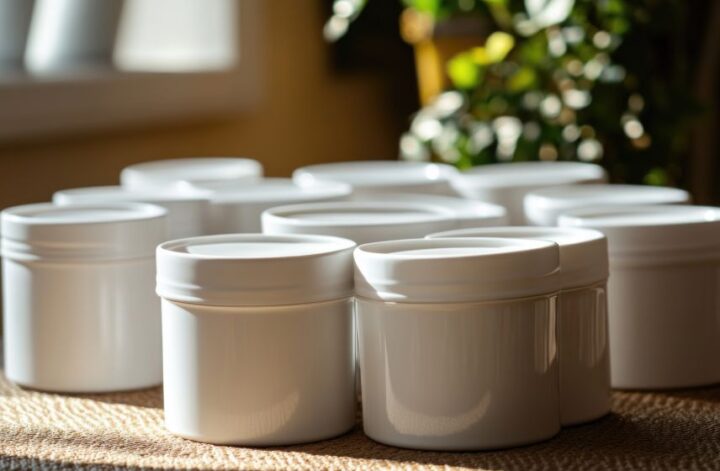
The base of a box does one job: it holds things. The lid does five or six, and it is usually the part that fails first, gets lost first and decides whether the purchase was a good one. So when shopping for a plastic container with lid, it pays to begin at the top. This guide works through the common closure types one at a time and shows where each earns its place, first around the house and then in a shop, kitchen or workshop.
Why the Lid Deserves First Look
A closure keeps dust, damp, insects and curious fingers out, and keeps smells, spills and small parts in. It also turns the box into a platform, so another can sit above. Different lids do these jobs to different degrees. A loose cover that stacks beautifully may not stop ants; a gasketed one that does may be slow to open twenty times a day. Being clear about which job matters most prevents buying on looks.
Press-On Lids in the Kitchen Cupboard
The simple push-fit lid suits dry goods at home: rice, flour, biscuits, pet food. In a humid climate an open packet goes soft or attracts weevils within weeks, and a tub with a snug lid slows that down. Choose clear bodies so contents are visible, and square shapes, which waste less shelf space than round ones. Check that the lid can be removed by an older relative with a weaker grip, a detail often overlooked.
Clip-Lock and Gasketed Lids for Liquids
Soups, marinades and leftovers need more than friction. Lids with side clips and a silicone ring seal firmly enough to travel in a bag. They cost more and the ring needs occasional removal and washing, since moisture trapped behind it can turn mouldy. If the tub will go into a microwave, confirm the base is polypropylene and loosen the lid first so steam escapes. For the freezer, leave headroom, because liquids expand as they set.
Hinged and Attached Lids on the Shop Floor
In a business, a lid that can be put down can be lost. Totes with two hinged flaps that mesh together solve this and are common for moving stock between a storeroom and a retail floor, or between outlets. They stack when closed and nest when open. Ranges of lidded industrial containers often include these alongside heavier crates with separate covers, and the choice comes down to how often the box is opened against how long it sits.
Loose Covers for Long-Term Storage
Seasonal decorations, archived files, spare uniforms and school books are opened perhaps twice a year. A plain drop-on cover with clip handles is enough. What matters more is rigidity, so a stack of four under a bed or on a storeroom shelf does not sag. In damp spots, add a moisture absorber inside, since no ordinary lid is airtight. Label the short end, not the top, because the top will be hidden by the next box.
Tamper-Evident Closures for Food Sellers
Home bakers, hawkers selling online and small caterers hand their product to a courier, not a customer. A lid with a tear-off tab or a breakable seal shows the buyer that the pack has not been opened since it left the kitchen. It is a small cost that prevents disputes. Make sure any tub sold with food inside is made from material intended for food contact, and keep the supplier’s confirmation on file.
Screw Caps and Wide-Mouth Jars
Threaded lids suit anything scooped or poured: spices, sauces, nuts, screws, beads, powdered detergent. A wide mouth lets a hand or a measuring scoop in. The thread gives a reliable close with little effort and survives being knocked over. In a workshop, clear jars of fasteners sorted by size save real time. In a pantry, they keep sugar from clumping. Check that replacement caps can be bought, since caps crack long before jars do.
Lids That Carry Weight
Some covers are designed as a floor for the next container. Look underneath the base for a recess that matches the lid’s raised edge, which stops a stack from sliding. A manufacturer’s stated stacking load, where given, is worth respecting. As a rough home test, close the box, place it on the ground and lean a hand firmly on the centre of the lid. If it dips noticeably, treat it as the top box only.
Looking After Lids and Bases Together
Mismatched sets are the commonest reason boxes get thrown out. Buying one range in a few sizes that share a lid reduces the problem. Wash lids on the upper rack of a dishwasher if they are dishwasher-safe at all, as heat warps thin ones. Keep them away from stove tops and direct sun. When a base stains or a lid no longer grips, recycle it according to the resin code moulded into it.
Picking the Right One
Ask three questions. What goes in: dry, wet, heavy or precious? How often is it opened: hourly, weekly or yearly? Where does it sit: fridge, shelf, van or floor? Dry and yearly points to a loose cover; wet and daily to clips and a gasket; shared and mobile to an attached lid. Buy one, live with it for a fortnight, then buy the rest. A plastic container with lid chosen from the top down rarely disappoints.